


Effective Dog Training Techniques
Building a Training Connection
Training your pup ain’t just about teaching them tricks—it’s about speaking the same language, even if it’s with hand signals and quirky sounds. As the folks over at the American Kennel Club say, the best training starts when you and your canine buddy get on the same wavelength.
Here’s the scoop:
- Mix it up with words, gestures, maybe even a whistle—talk to your dog in as many ways as possible.
- Check out the AKC programs to polish your dog whispering skills (American Kennel Club).
Using Positive Reinforcement
Why holler when you can hand out treats? Positive reinforcement is all ’bout high-fiving your furry pal for doing good, making sure they know being a good dog means awesome stuff happens (Small Door Vet).
Hot tips for keeping it positive:
- Quick on the draw—treat ’em right after they nail it.
- Keep commands snappy, like “Sit,” “Stay,” “Down.”
- Stick to a steady routine so they know what’s coming.
- Ditch the leash yanks and loud voices—they just muddle things up (American Kennel Club).
| Command | Goodie Given | Speedy Timing |
|---|---|---|
| Sit | Cookie | Right after the tush touches ground |
| Stay | “Good dog!” | Right when they freeze |
| Down | Belly scritches | As soon as they’re belly up |
Using the reward system, your dog will not only pick up cool tricks but will also bond with you like never before. For the deep dive, hop over to our article on positive reinforcement vs. discipline.
Scope out our other dog training techniques to keep your pup sharp and excited during training. Patience, consistency, a heap of love—toss in those ingredients, and voila, you’ve got a dog-training recipe for success. Happy tails, happy trails!
Importance of Consistency
Teaching your furry buddy some tricks isn’t just about waiting for them to catch on—it’s all about being steady! By sticking to a consistent game plan, your pup starts to know what you want and sets the stage for all the cool stuff they can learn later.
Consistent Training Methods
Being on the same wavelength in how you train makes all the difference. Some stuff worth remembering:
Same Words for Commands: Choose your words wisely and keep everyone in the loop. If “sit” is the magic word, then it’s gotta be “sit” for all, not some who go rogue with “siddown!” (American Kennel Club).
Uniform Techniques: Pick a training style and stick to it. If clicker training with treats is your jam, make sure no one in the house is just high-fiving for good behavior (Small Door Vet).
Consistent Rewards: Reward game needs to be tight. Whether it’s snacks, belly rubs, or a cheer, be prompt and predictable with your treats.
Let’s see why this matters with a crystal clear table:
| Training Element | Consistent Practice | Inconsistent Practice |
|---|---|---|
| Command Words | Everyone says “sit” for sit. | One says “sit,” another goes with “siddown!” |
| Training Techniques | Sticking to clickers and treats throughout. | Some prefer whistles, others just hand out pats. |
| Rewards | Treats handed out right after good behavior. | Delayed or mix-matched rewards for the same act. |
When you shoot for consistency, your pup tunes in better and it’s all smooth sailing from there. Want more cool tips? Check out clicker training for dogs.
Family Involvement

Keep the whole gang onboard. Everyone needs to sing the same tune so there’s no confusion for Fido.
- Unified Instructions: Gotta agree on commands and corrections (American Kennel Club).
- Shared Responsibilities: Spread the duties around. It keeps training fresh and covers all your bases.
- Consistent Environment: What your dog sees, hears, and interacts with daily should be steady to help them get the groove of things.
Picture this: Teaching your pup leash manners is way easier if everyone uses the same cue and sticks to the “walk on the right” rule. Want to make walks even better? Dive into leash training for better walks.
When everybody joins hands in training, not only does it work wonders for learning but also tightens the pooch-family bond. Keeping a united front gets everybody a thumbs-up in the training game and helps new dog folks really up their puppy’s behavior.
Training Basics for Dogs

Getting your pup to follow commands isn’t just about barking orders; it’s about making sure they get what you’re saying and tackling the usual hiccups that come with teaching them to sit, stay, or roll over. Nail that, and you’ll have a furry friend who listens more than that old uncle at Thanksgiving dinner.
Teaching Word Meanings
Dogs may have the waggiest tails, but they don’t come with a dictionary. They’re like little blank slates when it comes to understanding our gabble. So, it’s our job to make sense of “sit” and “stay” without turning into a human thesaurus. Pick one word per command—and stick with it like peanut butter sticks to the roof of your mouth.
Here’s how to get those meanings across:
- Pick a Word: Choose one word and hang on to it for dear life. Switching things up will just leave your pooch staring blankly.
- Sing From the Same Hymn Sheet: Make sure everyone at home uses the same words and gestures—or you’ll end up with a dog that has no idea if “sit” means plop or pizza.
- Rinse and Repeat: Practice is your best friend here. Keep on keepin’ on until the light bulb moment happens for your pup.
Curious pups might want to head over to:
Simple Commands Challenges
Nailing the basics like “sit” and “stay” can sometimes feel like teaching calculus to cats. But don’t chuck the towel in just yet. With some patience and treats more irresistible than a juicy steak, your dog will be strutting their stuff in no time.
Common Command Challenges and Solutions
| Command | What Could Go Wrong | How to Fix It |
|---|---|---|
| Sit | Dog has the attention span of a goldfish | Break out the good treats, cut down distractions |
| Stay | Walking away means running off | Slowly up the ante on time, hang tough with consistency |
| Come | “Who, me? Nah.” | Work with a long leash, bring the party with rewards |
| Down | Confusion city | Lure them down with a treat and lots of repeats |
If tackling these hurdles is like wrestling an alligator, or if your pup shows aggressive antics, it might be time to chat up a pro. Plus, toys that make your dog think can help grow their patience and calm (Pawz For Health).
Find more gems about professional dog training and specifics through these links:
To make sure your training goals are as sharp as a tack and more complete than a jigsaw puzzle, you might want to look into how to train a rescue dog, training tips for therapy & service dogs, and how to correct jumping behavior in dogs.
Teaching Basic Commands
Starting Training Early
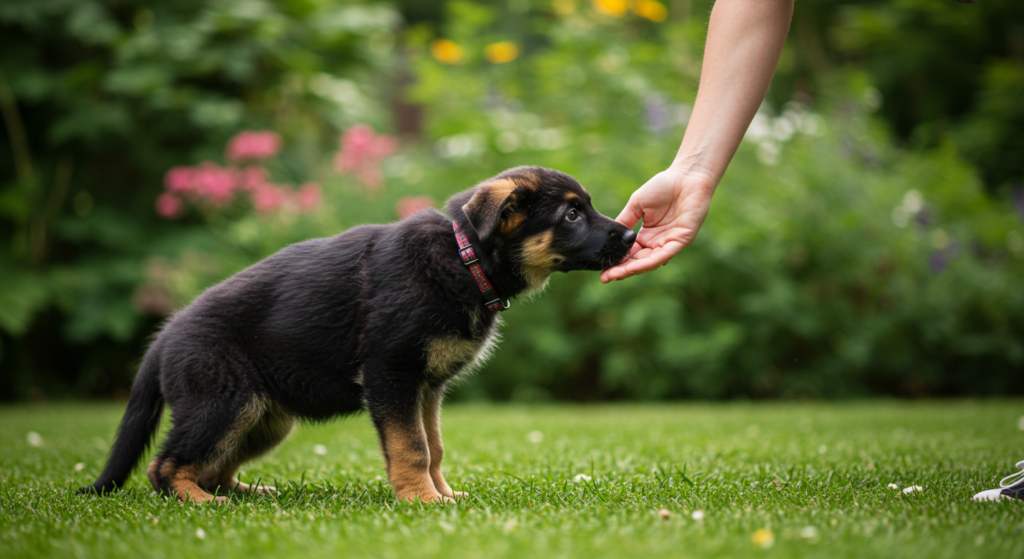
Training a pup early is like teaching a baby to babble—only on four legs! Jump-start your little furball’s education as soon as they’re about 8 weeks old. You’re talking short sessions here, like five to 10 minutes—just enough time to keep ’em engaged without throwing a fit or taking a nap mid-lesson.
| Puppy Age | Session Length |
|---|---|
| 8-12 weeks | 5-10 minutes |
| 12-16 weeks | 10-15 minutes |
| 4-6 months | 15-20 minutes |
Get cracking with simple stuff like sit, stay, and come. These basics aren’t just for show; they’re the building blocks for all the cool tricks they’ll learn later. Plus, what better way to break the ice with your new best friend?
Training Techniques for Commands
Training your dog is not about who barks the loudest—it’s about playing it smart. A few nifty techniques can make all the difference:
Positive Reinforcement: Think of this as patting your dog on the back, or let’s be real—a treat, a belly rub, or maybe just a “good boy!” for doing the right thing. Forget about scolding (that’s old school); it’s all about cheering for what you want to see more of. Curious how it stacks up against discipline? Take a look at our positive reinforcement vs. discipline guide.
Consistency: Just like your morning coffee routine, keep the words and gestures the same when laying down a command. Mix things up, and your pup will be more confused than a chameleon in a bag of Skittles! Get the whole fam involved to make sure everyone sticks to the same script.
Clicker Training: Ever heard of Pavlov’s dogs? Well, it’s kinda like that—but with a little “click” to mark the moment your pup gets it right, followed by a treat. Soon enough, they’ll hear the click and know applause is on the way. Sniff out more about it in our clicker training for dogs article.
Teach Word Meanings: Pair a word with an action like peanut butter with jelly. Say “sit” when those fuzzy haunches hit the ground. Do it on repeat till it sticks. We’ve got more tips on teaching word meanings, if you’re up for it.
Gradual Progression: Start easy in a quiet spot. Then throw some curveballs like distractions or a new scenery and watch them ace it like a canine pro.
Basic Command Examples
- Sit: Grab a treat, hold it close to that snout, and guide it upwards. When the derriere hits the floor, say “sit,” and hand over the treat with some love.
- Stay: Kick things off with your pooch sitting. Wave your palm like you’re saying “stop” and back away. If your dog stays put, throw them a treat and some affection. Stretch out the distance bit by bit.
- Come: Hook them up with a leash, get low to their level, and say “come,” while giving a gentle tug. When they waddle over, roll out the gourmet treat and shower them with cuddles.
Your early training efforts will pay off with a well-behaved, tail-wagging buddy. For all the lowdown on rookie mistakes and how to dodge them, check out puppy training mistakes to avoid.
Overcoming Training Challenges
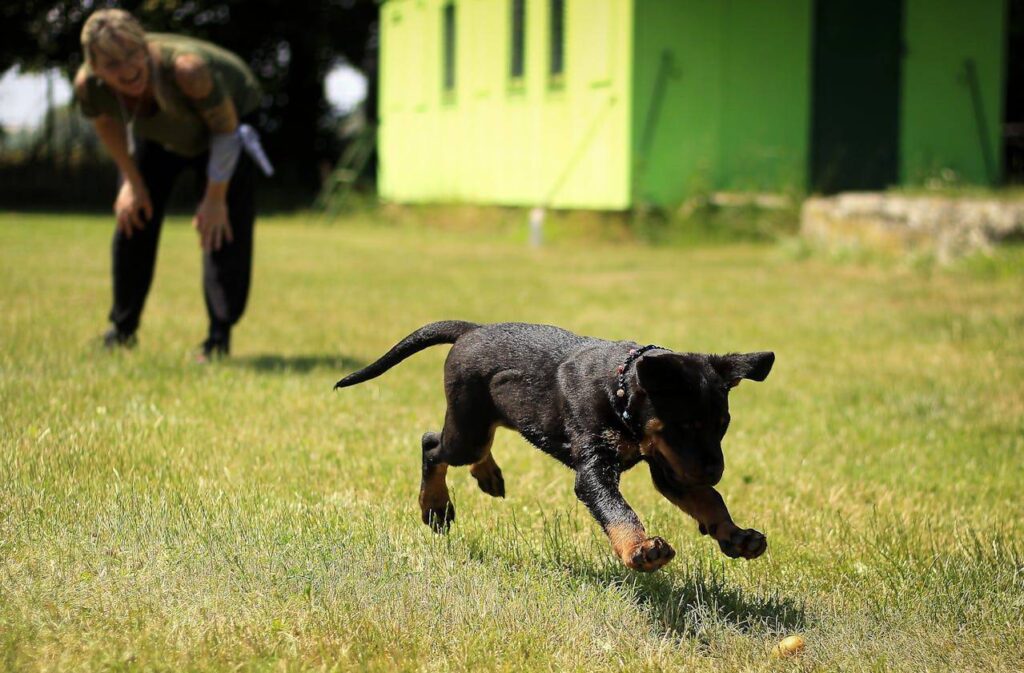
So, you’re tackling the big task of training your beloved dog, and it ain’t all puppy tails and wagging barks, is it? Older dogs have their quirks, and teaching them commands can feel like convincing a cat to take a bath. But don’t worry, we’ve got some real-world ways to help your furry pal get those commands down pat!
Adult Dog Training Hurdles
Training an adult dog? It’s like trying to teach grandma how to use TikTok. But here’s your cheat sheet to common challenges and how to handle them:
| Challenge | Solution | Related Topic |
|---|---|---|
| Lack of Basic Training | Start simple, my friend. Get ’em to sit, stay, and come. Give treats, give praise, and keep the faith. | basic obedience training for puppies |
| Distractions | Keep it chill at first—a quiet space. Then slowly add distractions as they get the hang of it. Treats, my friend. Use those treats. | how to get your dog to listen off-leash |
| Inconsistency | Stick to a routine. Same words, same signals. And whatever you do, make sure everyone in the house is on the same page. | positive reinforcement vs. discipline |
| Unintentional Reinforcement of Unwanted Behaviors | Give clueless behaviors the cold shoulder. Reward the good stuff only. | how to correct jumping behavior in dogs |
>> Looking to spice it up? We’ve got more tricks up our sleeve with advanced training techniques for adult dogs.
Addressing Behavior Issues
Adult dogs can have more hang-ups than a middle school cafeteria. Here’s your crash course in fixing those pesky problems:
Aggression
Aggression is no joke. Call in the pros—a trainer or a behaviorist. They’ll give you the scoop and tailor a plan for your barky buddy.
Separation Anxiety
If your dog turns into a panic machine when you leave, try easing them into it slowly. A little time apart and gradually more. Keep ’em busy with toys or those brain-twisting feeders (Pawz For Health).
Excessive Barking
Got a bark machine on your hands? Figure out what’s setting them off. Work on getting them used to triggers and teach ’em some new tricks. Peek at our tips: how to stop your dog from barking excessively and marker training: how it works.
| Behavior Issue | Solution | Related Topic |
|---|---|---|
| Aggression | Dial up a pro for tailored advice. | how to train a rescue dog |
| Separation Anxiety | Gradual separation with fun distractions to keep them busy. | crate training pros and cons |
| Excessive Barking | Pinpoint triggers, and get them used to the noise. Guide them towards calmer actions. | how to stop your dog from barking excessively |
Throw these tips into your training mix, and you’ll be marveled at how much your dog can learn. For even more insights, dive into our smorgasbord of advice on training dogs with special needs and service dog training tips.
Essential Dog Commands
Having a handful of solid commands under your belt keeps your dog out of trouble and boosts your quality time together. Let’s unravel those must-know commands every pup should master.
Recall Command “Come”
Getting your dog to come when you call? Seems basic, but it’s totally a lifesaver and a heart warmer! Here’s the friendly 411 for nailing this:
- Start off somewhere chill without a bunch of noise.
- Call their name with energy, followed by “come,” like you’re about to dish out pizza for dinner.
- When they hustle over, shower ’em with goodies—treats, hugs, or their fave toy.
- And hey, never use this command for anything gnarly. You don’t want them to think “come” means they’re in for a scolding.
Here’s a quick rewards cheat sheet:
| Reward Type | Examples |
|---|---|
| Treats | Tiny dog snacks |
| Affection | Head scratches |
| Toys | Chew ropes |
>> Need more intel? Hop over to basic obedience training for puppies.
Safety Command “Stay”
The “stay” command? Super handy in all sorts of places. Teaching it can be a breeze:
- With your dog chilling in a sit, throw out your palm and say “stay.”
- Back away slowly, upping the distance little by little.
- Short sessions are gold – wrap up each one on a high note and pump up their self-esteem (American Kennel Club).
Stick with the routine, and your furry pal will ace this in no time.
Potty Training Tips
Potty problems? No one wants those smells in the living room. Here’s how to sort it:
- Keep a steady schedule for bathroom breaks.
- Give your pup plenty of chances to do their biz outdoors, especially after a good meal or a snooze.
- Cheer them on and dish out rewards when they nail it outside.
- Steer clear of scolding slip-ups—fear and potty don’t mix well (Dogsee Chew).
>> Get the full potty scoop by checking out our housebreaking and potty training 101.
Keep these training rules rolling, and soon you’ll have the most chill, tail-wagging bestie. Hungry for more tips? Feel free to explore our content on dog training techniques and snag socialization tips for puppies.