



The rain whipped at your face as you hurried home, the wind howling like a lost soul. Suddenly, a flash of brown caught your eye – a small, shivering figure huddled beneath a dripping awning.
A stray dog, fear etched on its face, its tail tucked between its legs. Your heart ached. What would you do? Keep it? Report it? The legal maze of found animals swirls in your mind, leaving you confused and unsure. Amidst the warmth of compassion, some nagging questions arose: could this lost friend become your own? How long before a stray dog is legally yours?
But wait! Before you get lost in the legalese, let’s untangle the truth. This is not just about legalities – it’s about a furry friend, a lost soul yearning for home, and your chance to be a hero.
So, grab your leash, put on your detective hat, and get ready to embark on a journey of legal discovery, heartwarming stories, and responsible action. Let’s ensure this lost soul finds its way home, be it yours or theirs, in a way that upholds both the law and the bond between humans and animals.
How to Identify a Stray Dog?
Identifying a stray dog can be tricky, but here are some key signs to look for:
General Appearance:
- Dirty or matted fur: Stray dogs may not have regular grooming, and their fur might be in poor condition.
- Thin or malnourished: Lack of access to proper food can lead to weight loss and a thin appearance.
- Nervous or anxious behavior: Being lost and alone can make dogs fearful and unsure.
- No collar or identification tags: While some strays might have worn or lost collars, the absence of any identification is a strong indicator.
Other Clues:
- Wandering alone: Look for dogs roaming freely without any apparent owner nearby.
- Following people or begging for food: This could indicate hunger and a search for human connection.
- Appearing lost or confused: Watch for dogs that seem disoriented or unsure of their surroundings.
Remember: These are just general indicators, and not all stray dogs will exhibit all these signs. If you’re unsure, it’s always best to err on the side of caution and treat the dog as potentially lost.
“Finders Keepers” Myth: A Deeper Dive
The sight of a lost dog, eyes pleading for help, can evoke a powerful desire to welcome them into your home. But before you get swept away by the “finders keepers” mentality, it’s crucial to understand that finding a dog doesn’t automatically make you its owner. This seemingly simple statement holds layers of legal and ethical complexity, and navigating them ensures you make the best decision for both you and the lost animal.
The legal concept of “lost property” governs found objects. However, animals are not simply objects; they are sentient beings with potential owners. This distinction is crucial. While finding a lost wallet makes you its temporary custodian, finding a lost dog implies a responsibility to reunite it with its rightful owner, not claim it as your own.
Imagine finding a lost wallet with an ID and contact information. You wouldn’t keep it, would you? You’d try to return it to its owner, understanding the emotional and financial hardship they might be facing. Similarly, a lost dog deserves the same consideration. Its collar, tags, or microchip could hold the key to its happy return.
While the “finders keepers” notion might hold some sway in popular culture, it rarely reflects reality. Each state has its own laws governing stray animals, outlining specific procedures and responsibilities for finders. These laws often mandate reporting the found animal to animal control or shelters within a specific timeframe, allowing them to reunite the dog with its owner or initiate an adoption process if necessary.
State-by-State Variations: Charting the Stray Animal Legal Landscape
The legal path to stray dog ownership isn’t a one-size-fits-all journey. Just like the diverse landscapes across our nation, each state has its own set of regulations and procedures regarding stray animals, creating a complex legal maze for finders.
Understanding these variations empowers you to navigate this maze responsibly and ensure you’re acting within the law and upholding the well-being of the lost animal.
Remember, ignorance of the law is no excuse. By educating yourself on the legal framework surrounding stray animals, you can avoid potential legal repercussions and ensure you’re acting in the best interest of the lost dog.
Let’s unpack the key points to consider.
1. Mandatory Holding Periods
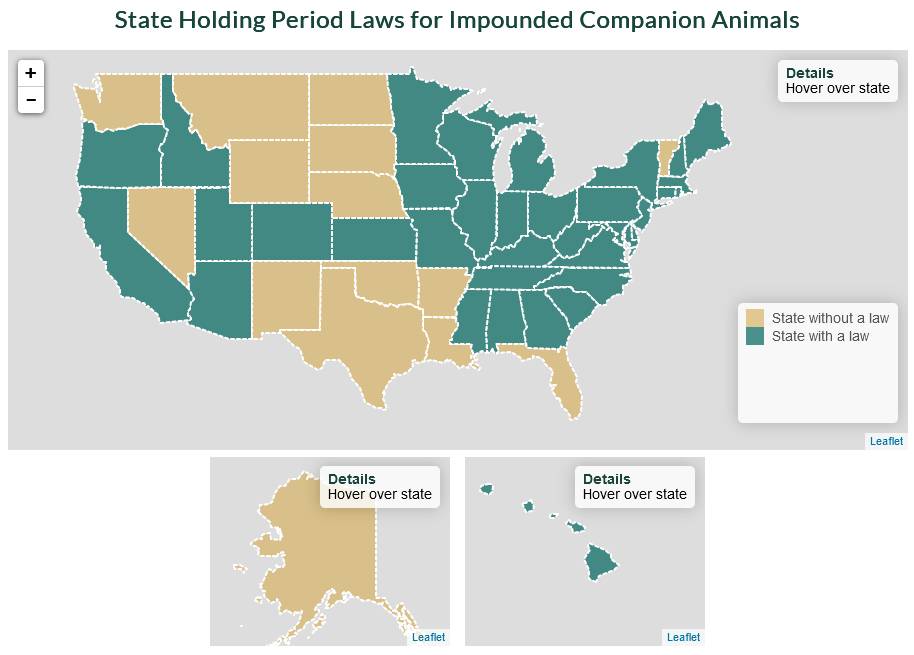
States and localities establish varying holding periods for strays, including dogs. Generally, the typical holding durations range from 48 to 72 hours, but some states may extend the period to 5 or 7 days, or even more.
The typical holding period for dogs without tags or a chip is 3 days, while those with a chip or tags are held for 5 days.
Here are examples of holding periods by state:
- Alabama: 7 days.
- California: 6 days.
- Massachusetts: 7 days.
- Minnesota: 5 days.
- New York: 5 days for unidentified dogs and 7 days for identified dogs.
- Texas: There is no uniform statewide policy specifying a particular holding period for found dogs. Texas delegates the authority to enact a holding period law to local authorities. For example, Houston and San Antonio apply a 3-day holding period. In Austin, they mandate a holding period of 3 days for dogs without tags or a chip and 5 days for dogs with a chip or tags.
- Wisconsin: No mandatory statewide holding period, but local ordinances may apply.
For a comprehensive overview of state-specific holding periods and laws for stray animals, visit the Animal Legal & Historical Center website.
Please note that the information pertains specifically to holding periods for impounded animals and not necessarily to pet adoption processes.
The holding period allows authorities to search for the owner, potentially using microchips or contacting registered owners in the area.
If the pet is not claimed within this period, it will be considered the property of the shelter for further action, which may include adoption, transfer to a rescue group, or euthanasia if deemed necessary.
Understanding your state’s specific laws is crucial to ensure you’re acting legally and ethically. It’s important to remember that the holding period isn’t a “free trial” for potential ownership. It’s a crucial window for reuniting the dog with its family and ensuring they have every opportunity to reclaim their beloved pet.
2. Owner Search Requirements:
States often mandate specific actions finders must take to locate the owner. This might involve checking for identification tags, contacting local shelters and animal control agencies, and posting “found dog” flyers in the vicinity. Additionally, some states require posting online on lost pet platforms or even advertising in local newspapers.
These seemingly tedious steps hold immense value. The heartbreak of a lost dog is profound, and minimizing the chances of a reunion would be a disservice to both the animal and its owner. By actively participating in the search, you’re not just following the law, you’re contributing to a potentially joyful homecoming.
3. Microchipping Regulations:

Microchips, tiny implants containing unique identification information, are becoming increasingly common for pets. Many states encourage or even mandate microchipping, and some require shelters to scan found dogs for chips before the holding period begins.
This technology plays a crucial role in reuniting lost pets with their families, often saving them from lengthy stays in shelters or even euthanasia.
If you find a dog with a microchip, contacting the microchip company is paramount. They can put you in direct contact with the owner, expediting the reunion and bringing immense relief to all parties involved.
Remember, a microchip is a lifeline for lost animals; respecting this technology goes hand-in-hand with responsible pet ownership.
4. Adopting a Stray Dog:
After the holding period expires and no owner comes forward, some states allow the finder to adopt the dog through the shelter or animal control agency. This process might involve additional fees and background checks to ensure a suitable forever home.
However, adopting a stray dog is not a guaranteed outcome of finding one. Always prioritize the owner’s search and respect their potential claim, even if you develop a strong bond with the animal. Remember, adoption should be a last resort, not a shortcut to pet ownership.
Your Responsibility as a Finder: Do the Right Thing
Finding a lost dog tugs at our heartstrings, awakening a desire to provide comfort and a loving home. But before you envision your new furry companion, remember your crucial role in this situation: you’re the temporary guardian, responsible for reuniting the dog with its rightful owner. This responsibility goes beyond legal mandates; it’s a matter of ethical consideration and empathy for the animal’s potential distress and the owner’s heartache.
Let’s explore the concrete steps you can take to fulfill your responsibility:
1. Check for Identification:
This is the first and most crucial step. Examine the dog for any collar, tags, or microchips. If a collar is present, check for identification tags with the owner’s name, phone number, or even veterinary clinic information. This seemingly small detail could be the key to a swift and joyful reunion.
If you suspect the dog might have a microchip, contact a veterinarian or animal shelter with a microchip scanner. This technology can reunite lost pets with their families even without traditional identification tags. Remember, every second counts when a pet is lost, so act promptly.
2. Contact Local Authorities and Shelters:
Many states require finders to report a stray pet to animal control or a shelter within a specific timeframe, commonly within 24 hours. Failing to report a found dog within this timeframe could result in fines or even legal repercussions.
Don’t delay! Report the found dog to your local animal control agency or shelter within 24 hours. This is not only a legal requirement in many states but also a crucial step in widening the search net for the owner. Shelters have access to lost pet databases and networks that can significantly increase the chances of a reunion.
Provide detailed information about the dog’s appearance, location where found, and any identifying features. Be sure to mention whether you found a collar, tags, or microchip, and share any relevant information they might contain. The more details you provide, the better equipped authorities are to help the dog find its way home.
3. Spread the Word:
Don’t underestimate the power of community! Create “found dog” flyers with clear photos and descriptions of the dog’s appearance. Distribute them in your neighborhood, local businesses, veterinary clinics, and pet stores. Utilize online platforms like Nextdoor, Lost & Found Facebook groups, and breed-specific communities to reach a wider audience.
Share the dog’s information on social media responsibly. Include high-quality photos and relevant details, but avoid disclosing your location or personal information. Encourage others to share and spread the word, increasing the chances of someone recognizing the dog and reuniting it with its owner.
4. Be Patient and Hopeful:
Reuniting a lost dog with its owner can take time and effort. Don’t get discouraged if the initial search doesn’t yield results. Maintain communication with animal control and shelters, and continue sharing the dog’s information online and in your community. Remember, even the smallest clue could lead to a happy homecoming.
By taking these steps, you demonstrate your commitment to responsible pet ownership and compassion for lost animals. You become an active participant in a potential reunion story, bringing comfort and joy not just to the dog but also to its heartbroken family.
When Can You Consider Adoption? Navigating the Holding Period Maze

The days tick by, the bond between you and the lost dog deepens, and a question lingers: how long before a stray dog is legally yours? Could this furry friend become your forever companion? While the urge to adopt might be strong, understanding the holding period and its legal implications is crucial.
Remember, the holding period is not a “try-before-you-buy” period for potential ownership. It’s a designated timeframe dedicated to reuniting lost pets with their families, offering them every chance to return home.
1. Demystifying the Holding Period:
The holding period varies significantly across states, typically ranging from 3 to 14 days. During this time, the animal control agency or shelter will hold the dog, allowing the owner to come forward and reclaim it. They’ll actively search for the owner using various methods, including:
- Checking microchip and tattoo databases: This technology is crucial for identifying lost pets, and shelters prioritize scanning all found animals.
- Contacting registered owners in the area: If the dog has a collar with identification tags, shelters will attempt to contact the owner through the information provided.
- Posting the dog’s information online and in local media: Utilizing online lost pet platforms and even local newspapers can significantly widen the search net.
It’s important to understand that the holding period is not set in stone. Some states allow extensions if the owner shows proof of effort to locate the dog or if extenuating circumstances are involved.
2. Common Misconceptions and Responsible Action:
The internet buzzes with misconceptions about the holding period. Don’t get misled by claims like a “30-day rule” being universally applicable. Always refer to your state’s specific laws and regulations to avoid legal repercussions and ensure you’re acting responsibly.
Remember, even if you develop a strong bond with the dog, prioritizing the owner search is paramount. Don’t pressure the shelter to release the dog early or engage in actions that could hinder the owner’s chance of reclaiming their pet. Respecting the holding period and actively assisting in the search demonstrates ethical pet ownership and compassion for both the dog and its family.
3. When Adoption Might Be Possible:
After the holding period expires and no owner comes forward, some states allow the finder to adopt the dog through the shelter or animal control agency. This usually involves an adoption process with specific requirements and fees, ensuring the dog finds a suitable and loving forever home.
However, adoption should always be a last resort, not a predetermined outcome of finding a lost dog. Never approach the situation with the expectation of keeping the dog, and prioritize the owner’s search throughout the entire process.
Beyond Legalities: The Ethical Choice & the Power of Reunion
While navigating the legal maze of stray dog ownership is crucial, venturing beyond legalities reveals the true essence of this situation: the ethical responsibility and the heartwarming power of reuniting lost pets with their families.

Let’s shift our focus from legalities to the emotional impact of your actions:
1. The Heartbreak of Loss & the Power of Empathy:
Imagine the anguish of losing a beloved pet. The frantic search, the sleepless nights, the constant worry – these emotions consume an owner whose furry companion is missing. By prioritizing the owner search and actively facilitating a reunion, you become a beacon of hope in their darkest hour.
Consider the joy that washes over a reunited family, the tears of relief, the overflowing gratitude. This isn’t just about following the law; it’s about understanding the profound emotional impact your actions can have on others. Choosing the ethical path, even if it means letting go of a potential companion, brings immense satisfaction and reinforces the importance of responsible pet ownership.
2. Building Trust & Strengthening the Human-Animal Bond:
By prioritizing the owner search and respecting the holding period, you build trust with the community and strengthen the bond between humans and animals. Your actions demonstrate that lost pets are valued members of families, and their well-being matters.
This fosters a sense of responsibility and compassion within the community, encouraging others to act similarly when faced with similar situations. It creates a ripple effect of positive change, promoting responsible pet ownership and fostering a more compassionate environment for all animals.
3. The Joy of Rescue & Adopting Responsibly:
While reuniting a lost dog with its family is the ultimate goal, there are situations where adoption might be the best outcome. If the owner doesn’t come forward, shelters work tirelessly to find loving forever homes for these deserving animals.
By choosing to adopt from a shelter or rescue organization, you open your heart and home to a deserving animal in need. You provide a second chance, offering love, stability, and a happy life. Remember, adoption is a noble act, filled with its own unique rewards and the joy of welcoming a new furry companion into your life.
Conclusion
Finding a lost dog is a whirlwind of emotions, filled with the desire to help and the potential for a new furry friend. But before you get swept away, remember: you’re not just finding a dog, you’re potentially embarking on a journey of legal responsibility, ethical choices, and heartwarming reunions.
But beyond legalities lies the true power of your actions. Imagine the joy of reuniting a lost pet with its family, the tears of relief, the overflowing gratitude. Choosing the ethical path, even if it means letting go, brings immense satisfaction and reinforces the importance of responsible pet ownership.
However, if adoption becomes the final chapter, remember the joy of rescuing a deserving animal in need. By opening your home and heart, you offer a second chance and contribute to a ripple effect of positive change within the animal welfare community.
So, the next time you encounter a lost soul with soulful eyes, remember this guide. Be their temporary guardian, a responsible finder, and an advocate for their well-being. Let your actions be guided by empathy, respect for the law, and the unwavering belief that every lost pet deserves a happy ending.
And finally, a word of advice: don’t be afraid to ask for help! Animal control agencies, shelters, and online communities are valuable resources filled with expertise and support. Together, we can ensure that every lost pet finds its way home, be it theirs or ours.
FAQs
Q: If I Find A Stray Dog Can I Keep It As My Own?
A: No, finding a stray dog does not automatically make you its owner. There are legal procedures and ethical considerations involved. Always prioritize reuniting the dog with its owner first.
Q: Can I let a stray dog go?
A: No, abandoning a stray animal is illegal and unethical. You have a responsibility to care for the dog’s basic needs and attempt to find its owner. Contact animal control or a shelter for guidance.
Q: What to do if a stray dog comes to you?
A: Look for tags, collars, or microchips. Contact the owner if information is found. Notify animal control or a shelter within 24 hours.Post “found dog” flyers. Use social media and lost pet platforms to reach a wider audience. Provide basic care, like food, water, and shelter while searching for the owner.
Q: How long before a stray dog is legally yours?
A: This varies by state. It’s NOT a “finders keepers” situation. Research your state’s specific laws and holding periods. Generally, you cannot claim ownership until the holding period ends and no owner comes forward.
Q: How long before a stray dog is legally yours in Arizona?
A: Stray dogs are held for a minimum of 72 hours, or for 120 hours if the animal is microchipped or wearing a tag. After the holding period expires, you may begin the process of adopting the stray dog. However, it’s important to check the local laws and regulations.
Q: How long before a stray dog is legally yours in Arkansas?
A: Stray dogs are held for 5 days. After the holding period expires, you may begin the process of adopting the stray dog. However, it’s important to check the local laws and regulations.
Q: How long before a stray dog is legally yours in California?
A: Stray dogs are held for 6 business days, not including the day of impoundment except in specific situations. After the holding period expires, you may begin the process of adopting the stray dog. However, it’s important to check the local laws and regulations.
Q: How long before a stray dog is legally yours in Colorado?
A: Stray dogs are held for a minimum of 5 days, or 3 days if the animal is deemed to be dangerous and is not microchipped. After the holding period expires, you may begin the process of adopting the stray dog. However, it’s important to check the local laws and regulations.
Q: How long before a stray dog is legally yours in Florida?
A: Stray dogs with no traceable identification are placed on a 3-day stray hold, whereas owned animals are held for 5 working days. After the holding period expires, you may begin the process of adopting the stray dog. However, it’s important to check the local laws and regulations.
Q: How long before a stray dog is legally yours in Georgia?
A: Stray dogs are held for a stray holding period of 5 full business days, they are held within 5 business days of the date of notice given to the owner or 30 days after publication if the owner is unknown. After the holding period expires, you may begin the process of adopting the stray dog. However, it’s important to check the local laws and regulations.
Q: how long before a stray dog is legally yours in Illinois?
A: If the dog is microchipped, the last known owner must be given notice at least 7 days prior to disposal of the animal. After the holding period expires, you may begin the process of adopting the stray dog. However, it’s important to check the local laws and regulations.
Q: How long before a stray dog is legally yours in Indiana?
A: Most shelters follow a 3-day holding period for stray dogs, allowing owners to claim them before the animal becomes the property of the shelter. After the holding period expires, the animal may be put up for adoption. However, it’s important to check the local laws and regulations.
Q: How long before a stray dog is legally yours in Michigan?
A: Stray dogs are held for 4 days or 7 days if the animal has a collar, license, or other evidence of ownership. After the holding period expires, you may begin the process of adopting the stray dog. However, it’s important to check the local laws and regulations.
Q: How long before a stray dog is legally yours in Missouri?
A: Stray dogs are held for 7 days. After the holding period expires, you may begin the process of adopting the stray dog. However, it’s important to check the local laws and regulations.
Q: How long before a stray dog is legally yours in North Carolina?
A: Stray dogs are held for at least 72 hours. After the holding period expires, you may begin the process of adopting the stray dog. However, it’s important to check the local laws and regulations .
Q: How long before a stray dog is legally yours in Ohio?
A: Stray dogs are held for 3 days; they can be held for additional 48 hours after if requested by the owner. After the holding period expires, you may begin the process of adopting the stray dog. However, it’s important to check the local laws and regulations.
Q: How long before a stray dog is legally yours in Oklahoma?
A: Stray dogs with identification are typically held for a minimum of 5 days, while those without identification are held for a minimum of three days. After the holding period expires, you may begin the process of adopting the stray dog. However, it’s important to check the local laws and regulations.
Q: how long before a stray dog is legally yours in Oregon?
A: Stray dogs are held for a minimum of 5 days if the owner is known or 3 days if the owner is unknown. After the holding period expires, you may begin the process of adopting the stray dog. However, it’s important to check the local laws and regulations.
Q: how long before a stray dog is legally yours in Pennsylvania?
A: Licensed stray dogs are held for 5 business days once a certified letter is delivered to the owner. Unlicensed dogs, without an ID tag or microchip, will be held for 2 days. After the holding period expires, you may begin the process of adopting the stray dog. However, it’s important to check the local laws and regulations.
Q: How long before a stray dog is legally yours in South Carolina?
A: Stray dogs are held for 5 days. After the holding period expires, you may begin the process of adopting the stray dog. However, it’s important to check the local laws and regulations.
Q: How long before a stray dog is legally yours in Tennessee?
A: Dogs wearing rabies vaccination tag or other identification are held for 5 days. Otherwise, they will be held for 3 days. After the holding period expires, you may begin the process of adopting the stray dog. However, it’s important to check the local laws and regulations.
Q: How long before a stray dog is legally yours in Texas?
A: There is no uniform statewide policy specifying a particular holding period for stray dogs. Typically, they are kept for a minimum of 3 business days. After the holding period expires, you may begin the process of adopting the stray dog. However, it’s important to check the local laws and regulations.
Q: how long before a stray dog is legally yours in Virginia?
A: Stray dogs are held for a minimum of 5 days. After the holding period expires, you may begin the process of adopting the stray dog. However, it’s important to check the local laws and regulations.
Q: How long before a stray dog is legally yours in Washington State?
A: Stray dogs are typically held for a 3-day stray hold period. After the holding period expires, you may begin the process of adopting the stray dog. However, it’s important to check the local laws and regulations.